How-to · Published 2026-10-30 · Updated 2026-10-30 · 3 min read
How to Make Instagram Reels Without Filming Yourself
You can make Instagram Reels without filming by rendering motion graphics from code: animated text, shapes and code-drawn art, stitched into a 1080x1920 MP4 with FFmpeg and paired with a text-to-speech voice or music. The three example reels we checked run 16 to 33 seconds.
What are the ways to make a reel without filming?
There are five common approaches. This table is our own assessment from building and testing them, not a published benchmark.
| Method | You need | Strength | Weakness |
|---|---|---|---|
| Stock footage and captions | A footage source, an editor | Looks like video | Footage choices take time; looks generic |
| Screen recording | Something worth showing | Real proof when you sell software | Needs a product or process to demonstrate |
| AI avatar or talking head | A generation tool | Has a face without filming | Tool-dependent; viewers may read it as synthetic |
| Slideshow of carousel slides | Existing slides | Fast | Often reads as a static post set to music |
| Code-rendered motion graphics | Node.js, FFmpeg, a plan file | Repeatable in batches; text is exact | Setup cost; no live-action footage |
How does a code-rendered reel get made?
A plan file says what each beat shows. A script draws every frame as HTML or SVG, a second pass adds the voice and sound, and FFmpeg encodes the MP4. The Content Engine turns each idea into one carousel and two reels from the same plan, and a reel takes about a minute to render on our test PC. Voiceover reels use a text-to-speech model that runs on your own computer (Python is needed for that part), so there is no per-minute voice fee.
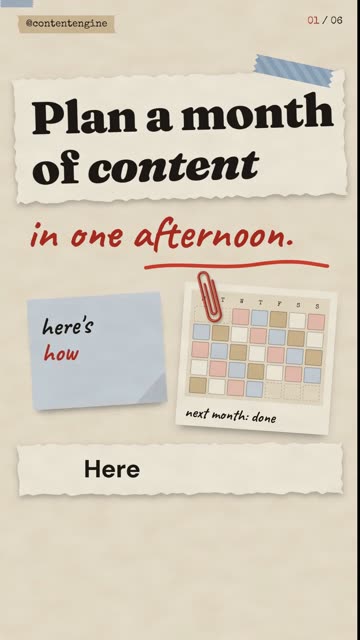
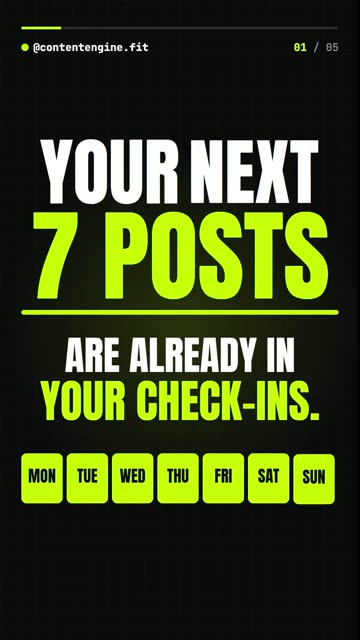
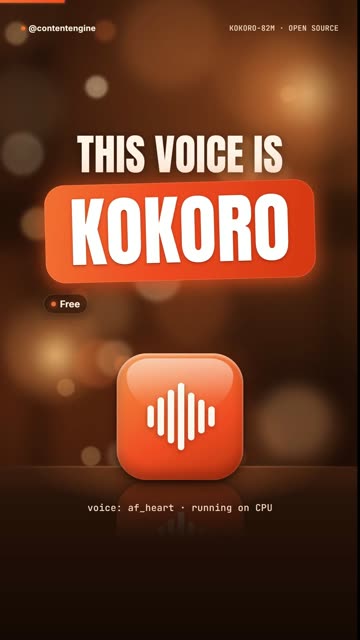
Real frames from three engine-rendered reels. Each file is 1080x1920.
What rules do we follow so the reel holds attention?
- Hook in the first second. The first frame should state the pain or the promise.
- New beat every 1.5 to 2.5 seconds. A cut, a number counting up, a new line, anything that changes what the eye sees.
- Keep key text out of the bottom ~380 px and right ~120 px. Instagram's interface covers those areas.
- Show the thing, do not describe it. If the reel was made by the product you sell, say so. That demonstration cannot be faked.
These are the working rules from our playbook, tested on our own pages. They are not Instagram-published requirements, and we have no causal evidence that any of them lifts reach.
What does this cost and what are the limits?
The renderers run on your computer with no credits. You still need a paid Claude plan to drive the research and planning, plus Node.js and FFmpeg. We have tested on Windows only. A reel from code will not look like live-action footage, and a faceless format fits best where the buyer wants an artifact (a template, a checklist) more than a relationship with a person.
Want the carousel version first? Read how to make carousels with Claude.
Frequently asked questions
Can I make Instagram Reels without showing my face?
Yes. Code-rendered motion graphics, screen recordings and stock footage need no face. In our tests the code-rendered route gave the most repeatable batches.
What size is an Instagram Reel?
Our reels are rendered at 1080x1920 pixels (9:16). We did not find Instagram's own statement of supported sizes while writing this, so confirm in the app.
Do I need to record a voiceover?
No. A text-to-speech voice that runs locally can narrate, or you can use music and on-screen text only.
How long does it take to render a reel?
About a minute on our test PC. Slower computers take longer, and we have only tested on Windows.
The Content Engine researches a niche, writes post ideas and renders carousels (PNG) and reels (MP4) on your own computer. USD 67 one time, 14-day refund. It needs a paid Claude plan (Pro or higher), Node.js and FFmpeg, and we have tested it on Windows only.
See the Content EngineSources and our data
- Our own data: three example reels measured with ffprobe on 2026-10-30 (1080x1920, 32.0 s, 16.0 s and 33.4 s); timing and safe-area rules from our playbook; render time from our test PC (about a minute per reel).
- FFmpeg, the open source encoder: ffmpeg.org
Keep reading
Results vary. No promise of views, followers or income. The Content Engine is an independent product, not made or endorsed by Anthropic. Claude is named only as the tool it runs on.